You finally clear a six-foot patch of floor in your apartment, commit to lifting at home, and order adjustable dumbbells because they seem like the obvious small-space win. Then reality shows up: the weight jumps feel awkward, your grip gives out before your legs do, your room is too hot to train well, and your “travel workout kit” somehow needs a charger, an adapter, and a calmer brain just as much as it needs iron. That mix of gear, environment, and recovery is exactly why adjustable dumbbells are having a moment right now—and why many home exercisers still use them badly.
This week’s home-fitness signal is clear: smart, compact training tools are winning, but the bigger trend is not just buying adjustable dumbbells. It’s building a home setup that keeps working when space is tight, weather gets messy, and your attention is split. The strongest buyers are no longer asking only, “What’s the best dumbbell?” They’re asking, “What setup helps me actually train consistently?”
The quick-hit trend report: what’s driving the adjustable dumbbells spike
- Small-space efficiency is now a primary buying factor. One pair of adjustable dumbbells can replace a rack of fixed weights, which matters if your workout zone is a bedroom corner, office nook, or shared living room.
- Trainer-backed picks are pushing mainstream demand. Models like the Bowflex SelectTech 552 stay visible because they reach a meaningful load range without demanding a full garage-gym footprint.
- Grip strength is getting overdue attention. More lifters are realizing that weak hands and forearms can bottleneck rows, carries, deadlift variations, and even high-rep goblet squats.
- Travel and hybrid training are merging. People want one setup for home, plus a backup kit for hotel rooms, road trips, and storm-disrupted routines.
- Weather volatility changes training behavior. When severe storms or sudden heat waves hit, people train indoors more often—and that exposes the strengths and flaws of compact equipment fast.
- Mental recovery is entering the gear conversation. Rumination, stress, and decision fatigue can quietly derail consistency more than a “suboptimal” rep scheme ever will.
That may sound like several unrelated headlines mashed together. It isn’t. The real trend is friction reduction. Home exercisers are choosing tools and routines that reduce barriers: less clutter, less wasted setup time, fewer excuses when travel or bad weather hits, and fewer mental spirals that turn one missed session into a lost week.
Why adjustable dumbbells still dominate the buyer decision
If you train in a small space, adjustable dumbbells solve the biggest problem in home strength work: load variety without storage chaos. A single pair can cover presses, rows, split squats, Romanian deadlifts, curls, floor presses, and loaded core work. That versatility is why they keep rising to the top of comparison lists.
The benefits people get right
- Footprint savings: One cradle beats five to ten pairs of fixed dumbbells scattered around your room.
- Progressive overload: You can scale weight instead of repeating the same easy set for months.
- Better workout density: Fast load changes help you move from upper-body to lower-body work without rebuilding your entire setup.
- Beginner-to-intermediate range: For many households, a top weight around 50 pounds per hand covers a surprisingly broad menu of exercises.
But here’s the mistake: people buy adjustable dumbbells for convenience, then program them like a commercial-gym rack is sitting next to them. If the weight increments are too large for lateral raises, too clunky for snatches, or too slow to change during circuits, your plan needs to adapt. The tool is compact. Your programming should be smarter too.
On recovery days, many lifters pair dumbbell flows, mobility drills, and floor work with one of the best rated yoga mats because a stable, cushioned surface makes hip openers, glute bridges, and core resets much more usable in tight spaces.
The hidden bottleneck: grip strength is deciding more workouts than you think
You might think your back is weak because rows feel limited. Sometimes your back is fine and your hands are the problem. Grip strength is one of the most overlooked metrics in home training, especially with adjustable dumbbells, where handle shape, balance, and bulk can challenge your hold more than standard fixed bells do.
- If your grip fails first, your target muscle loses quality work. That means fewer productive reps for rows, hinges, split squats, and carries.
- Poor grip can distort technique. You compensate with wrists, shoulders, or momentum.
- Grip endurance matters for body recomposition. Longer tension sets and loaded carries are brutally effective, but only if your hands can stay in the game.
How to train grip without hijacking your whole session
- Finish with carries: 3 to 5 rounds of 20 to 40 seconds. Suitcase carries are especially useful in narrow apartments.
- Add timed holds: At the end of your final set of Romanian deadlifts or shrugs, hold the bells for 15 to 30 extra seconds.
- Use controlled eccentrics: Slow lowering phases in rows and curls challenge grip and forearms without extra equipment.
- Program towel squeezes or dead hangs on non-lifting days if you have a safe anchor point or bar access.
Expert-level tip: If your adjustable dumbbells have chunky handles or a shifting balance point, treat that as a training variable. Keep higher-skill or fast-transition movements lighter, and save heavier loading for stable patterns like goblet squats, split squats, floor presses, and hinges.
Weather, travel, and the new reality of interrupted training
When damaging storms, high winds, or sudden heat waves roll in, your training environment changes overnight. Outdoor runs get scrapped. Garage sessions get uncomfortable. Your best plan becomes the one you can do safely indoors, quickly, and with minimal friction. That’s where adjustable dumbbells become more than a product category—they become your continuity tool.
- Storm days favor compact strength circuits. You need low-equipment sessions that don’t require stepping outside or commuting.
- Heat waves punish high-volume cardio in cramped rooms. Strength supersets with measured rest can be more sustainable than trying to mimic a bootcamp class in a hot apartment.
- Travel magnifies gear decisions. You may have dumbbells at home, but your backup system still matters.
If you travel often, your home strength plan should have a portable version built into it. That doesn’t mean trying to pack dumbbells into a suitcase. It means keeping a parallel menu of band work, bodyweight strength, and compact cardio. For many people, that starts with genuinely portable home gym equipment that can handle hotel-room push, pull, squat, hinge, and core work without wrecking your luggage allowance.
The travel gear angle most exercisers ignore
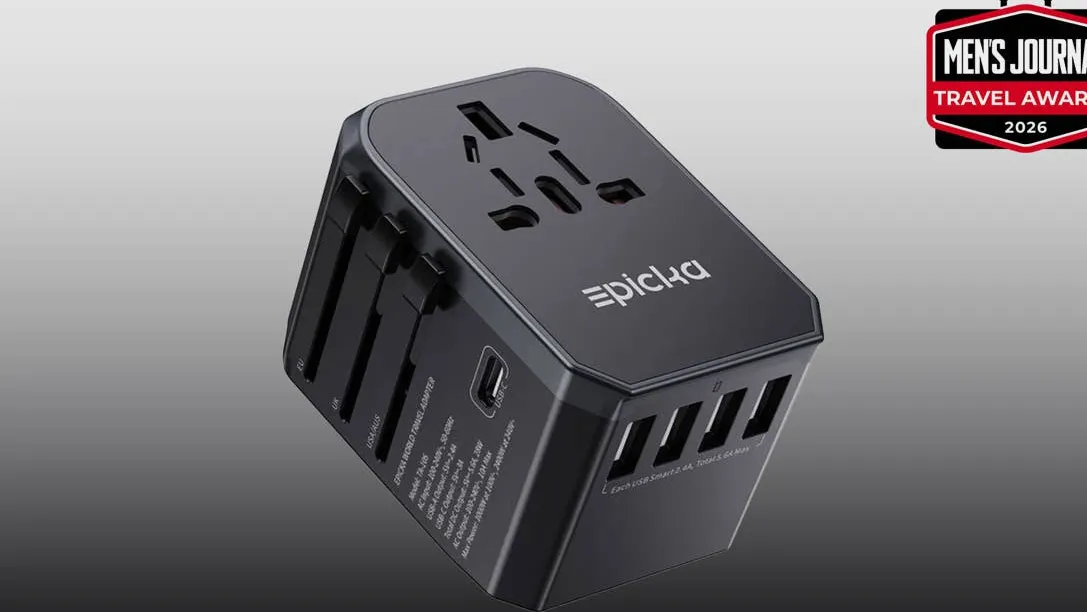
Charging logistics sound boring until they ruin your training day. If you use a fitness watch, headphones, phone-based workout app, and maybe a recovery tool, one reliable travel adapter suddenly matters. The recent buzz around multi-port universal adapters makes sense because they reduce a very real form of travel friction: not enough outlets, wrong plug standards, and dead devices right when you planned to train. A compact adapter that can handle multiple devices at once is not “fitness equipment,” but for travelers trying to preserve routine, it supports the routine.
- Less charging chaos = better adherence.
- Fewer missing-device excuses = more completed sessions.
- One organized kit beats a bag full of random cables.
The mental fitness angle: rumination is a bigger training killer than your dumbbell brand
Here’s the uncomfortable truth: many stalled home workout plans are not caused by bad equipment. They’re caused by rumination—replaying missed sessions, second-guessing your program, or turning one off day into a story that you’re “falling off.” That mindset hits especially hard in home training because there’s no class start time, no coach waiting, and no commute to create a transition.
Consistency loves simplicity. The more decisions you remove, the more likely you are to train when motivation is low.
- Don’t over-compare gear. A very good adjustable dumbbell you use beats the “perfect” one you keep researching.
- Pre-build 20-minute sessions. Decision fatigue is brutal after work or during stressful weather weeks.
- Use reset rules. Miss one day? Resume with the next scheduled workout. No punishment workout. No doubling up.
- Track one performance marker. Reps, load, hold time, or total rounds. Not everything at once.
Ask yourself: are you actually under-equipped, or are you mentally negotiating every session to death?
The smartest way to use adjustable dumbbells in a small-space setup
If you want results without clutter, treat your space like a system, not a storage pile. Adjustable dumbbells should be the anchor, but not the whole plan.
Your small-space strength stack
- Primary tool: Adjustable dumbbells for strength progression.
- Floor tool: A quality mat for mobility, core work, Pilates-style finishers, and recovery.
- Portable backup: Bands or suspension-style gear for travel and no-dumbbell days.
- Low-noise cardio option: A compact tool for conditioning in apartments or early mornings.
For renters or anyone training near sleeping kids or downstairs neighbors, Cordless Jump Ropes can be a surprisingly practical cardio add-on. They give you a rope-style rhythm hit with less noise, less ceiling risk, and far less chance of clipping furniture.
A sample storm-proof, heat-wave-proof 25-minute session
- Minute 1-5: Mobility warm-up, bodyweight squats, shoulder circles, glute bridges
- Minute 6-12: Goblet squat + floor press, alternating sets
- Minute 13-19: Romanian deadlift + one-arm row
- Minute 20-23: Split squat hold or reverse lunge + suitcase carry or hold
- Minute 24-25: Breathing reset on the floor, slow exhales to downshift stress
This works because it respects real constraints: limited room, limited time, inconsistent weather, and the need for enough strength stimulus to matter. No fancy transitions. No ten-piece setup. Just clean movement patterns and enough load to create progress.
Where the trend is heading next
The next wave in home fitness is not just “more compact.” It’s more integrated. Buyers want equipment that fits apartments, routines that survive travel, conditioning options that don’t anger neighbors, and recovery habits that stop mental spirals before they derail momentum. Adjustable dumbbells sit right in the center of that shift because they solve the biggest space problem while still delivering real strength work.
- Expect more buyers to prioritize grip comfort and handle feel, not just max weight.
- Expect hybrid kits to grow: adjustable dumbbells at home, portable gear for the road.
- Expect weather-driven indoor training demand to keep rising.
- Expect recovery and mindset content to matter more in equipment decisions.
If you’re shopping now, the smart move is simple: choose adjustable dumbbells that match your strongest lifts, respect your smallest space, and fit a routine you can repeat on stressful weeks. Then train your grip, simplify your backup plan for travel, and stop ruminating over perfect conditions. Progress rarely needs perfect. It needs repeatable.